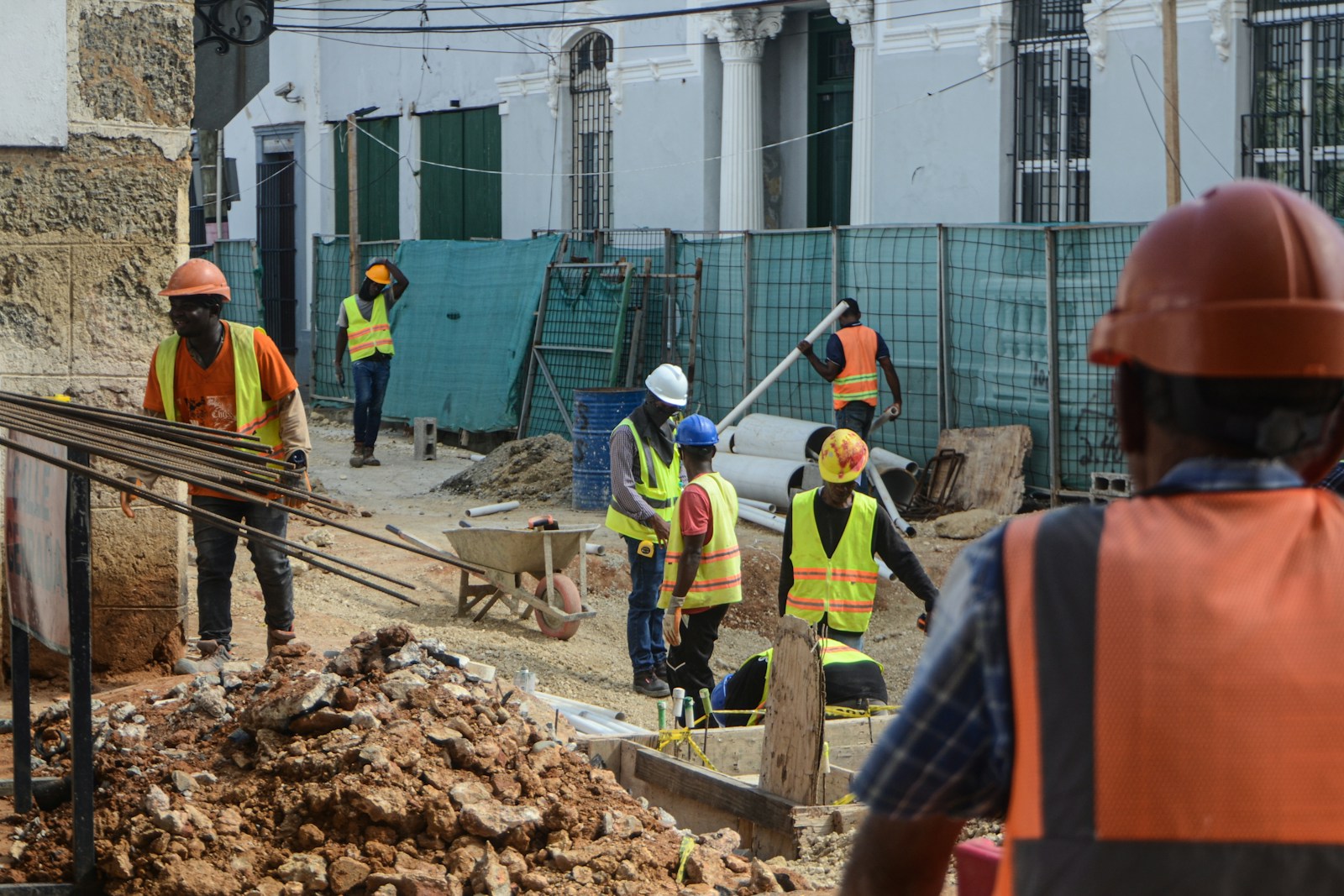
AI reduces the risk of accidents on construction sites by automatically detecting dangerous situations, such as missing PPE, entry into high-risk areas, or off-hours activity. Enlaps applies this approach with its Tikee timelapse camera, a site safety solution that combines connected cameras, AI image analysis, visual alerts, and HSE indicators.
💡
Key Takeaways - Preventing Site Accidents with AI
In 2023, the construction sector in France recorded 76,758 initial-settlement workplace accidents and 149 deaths.
Construction AI analyzes images to detect missing personal protective equipment, presence in dangerous zones, and abnormal movements.
Enlaps' myTikee transforms construction site images into actionable visual elements and HSE indicators for safety teams.
Article L4121-1 of the French Labor Code requires employers to take all necessary measures to ensure the safety and protect the health of workers.
The DUERP (Single Risk Assessment Document) logs occupational risk assessment results and serves as the foundation for a company's prevention plan.
How does AI reduce accidents on construction sites?
AI reduces accidents on construction sites by making risks visible before an incident occurs. A connected camera captures site images, a visual analysis model identifies dangerous situations, and HSE teams receive alerts or actionable indicators.
Enlaps' myTikee uses AI to detect risky behavior, notably by verifying PPE compliance or flagging presence in prohibited areas 24/7.
This approach transforms site safety into a proactive process. Teams no longer rely solely on rounds, periodic audits, or manual reports. They have continuous visual monitoring and a searchable history at their disposal.
Why does construction remain a priority sector for site safety?
Construction remains a priority sector for site safety because it concentrates high physical risks: falls from height, manual handling, equipment movement, co-activity, machinery, and restricted access zones.
In 2023, the construction sector accounted for 76,758 initial-settlement workplace accidents in France, resulting in 149 deaths during the year.
Falls from height and on the same level represent 27% of workplace accidents and 22% of fatalities across all sectors. In construction, falls remain a leading cause of severe or fatal accidents.
Construction AI provides an operational answer to this risk exposure: it detects and documents visible dangerous situations within the camera's field of view.
What risks does AI detect on a construction site?
AI detects site risks from images captured continuously or at regular intervals. The primary use cases cover PPE, hazardous areas, intrusions, unusual movements, and activities taking place outside scheduled hours.
Enlaps' myTikee automatically detects missing personal protective equipment and suspicious activity outside business hours.
These visual signals provide HSE managers with a factual basis. A missing hard hat, an unauthorized presence in a restricted zone, or an off-hours intrusion become actionable prevention data.
How does AI detect missing PPE on a site?
AI detects missing PPE on a site by comparing visible elements in images against compliance rules defined for the observed zone. Mandatory PPE includes hard hats, high-visibility vests, and other required equipment based on the activity and prevention plan.
Enlaps' myTikee analyzes site images to identify compliance gaps related to construction PPE detection.
PPE detection helps create HSE indicators. Tracking PPE compliance rates allows safety teams to measure discrepancies over time, target high-risk areas, and document corrective actions.
How does AI secure hazardous zones on a site?
AI secures hazardous zones on a construction site by detecting individuals in areas where access must be restricted. A hazardous zone corresponds to a perimeter exposed to an identified risk: lifting operations, machinery traffic, excavation, storage, roofing, scaffolding, or areas off-limits to the public.
Enlaps Tikee detects presence in restricted zones and flags abnormal movements or off-hours intrusions as part of a broader site safety strategy.
Hazardous zone detection strengthens co-activity management. On a site involving multiple contractors, AI provides a visual breakdown of interactions between personnel, work zones, and equipment.
ENLAPS SHOP
The camera and the image processing platform


Made in France · Express Shipping · Trade-In Offer
How does AI transform site images into HSE indicators?
AI converts construction site images into HSE indicators by categorizing detected events: PPE compliance, presence in high-risk zones, suspicious movements, intrusions, off-hours activity, or risk evolution over time.
Enlaps' myTikee converts visual data into useful HSE indicators for site monitoring: PPE compliance rates and trend evolution over time.
These indicators streamline safety meetings, internal audits, and action plans. HSE managers have time-stamped visual evidence rather than isolated observations or manual reports.
How does AI help document a site incident?
AI helps document a site incident by linking alerts to time-stamped images and a searchable visual log. This documentation provides a factual record of conditions observed before, during, or after an event.
Enlaps' myTikee provides time-stamped visual archives, before/after documentation, and a searchable visual history.
These visual elements assist with HSE analysis, feedback sessions, internal investigations, and discussions between project owners, project managers, and contractor teams. A time-stamped image eliminates guesswork and clarifies observable facts.
How does Enlaps use AI to strengthen construction safety?
Enlaps uses AI to turn construction site images into actionable safety insights. The Tikee solution captures images, converts them into visual data, and makes them accessible to HSE managers, site managers, and project leaders.
Enlaps' myTikee uses AI 24/7 to detect risky behavior, PPE compliance, and danger zones.
The Enlaps solution is designed for construction professionals seeking to shift from reactive safety to proactive prevention backed by continuous visual documentation. It combines field capture, intelligent analysis, and HSE performance indicators.
Does AI replace collective protection equipment and HSE rules?
AI does not replace collective protective equipment, HSE procedures, training, prevention plans, or Labor Code obligations. It complements these measures with an added layer of visual detection and documentation.
Article L4121-2 of the French Labor Code places risk avoidance, risk assessment, and addressing risks at the source among the general principles of prevention.
An AI camera does not eliminate a physical hazard. It helps teams spot a compliance gap, verify a zone, track a trend, and initiate preventive action.
How to integrate an AI solution into a site prevention strategy?
Integrating an AI solution into a site prevention strategy follows a straightforward workflow: identify priority risks, define zones to monitor, set up alerts, analyze indicators, and document corrective actions.
Enlaps' myTikee offers a practical visual foundation for tracking PPE, high-risk areas, intrusions, and safety behavior trends on site.
This integration works seamlessly with existing HSE routines: safety briefings ("safety 15 minutes"), field visits, coordination meetings, DUERP updates, post-incident reviews, and reporting to project owners.
DEMONSTRATION - 30 MINUTES
See the Tikee Solution in action at a construction site like yours
An expert shares their screen with a real-world project connected to the myTikee platform.
Connecting cameras
Managing different camera angles
AI Dashboard
People-blurring feature
No obligation · Time slots available quickly
FAQ
How can AI reduce accidents on construction sites?
AI reduces accident risks on sites by automatically detecting dangerous situations visible in captured images. It identifies missing PPE, presence in high-risk zones, intrusions, and off-hours activity. Enlaps' myTikee converts these detections into visual evidence and HSE indicators.
Which AI technology is used for construction site safety?
Site safety primarily uses computer vision AI. This technology analyzes camera images to recognize people, equipment, zones, movements, and risky situations. Enlaps' myTikee applies this logic to PPE detection, hazard zone monitoring, and behavior tracking.
Can AI detect a missing hard hat on a construction site?
Yes. Construction AI detects missing hard hats when its computer vision model is configured to recognize personal protective equipment. Enlaps' myTikee flags missing PPE and converts these compliance gaps into actionable safety data for HSE teams.
Can AI monitor a dangerous zone on a construction site?
Yes. AI monitors hazardous zones by analyzing images of a defined perimeter. It detects presence in restricted areas, abnormal movements, or off-hours activity. Enlaps Tikee uses this visual surveillance to trigger alerts and eliminate blind spots on site.
Does AI replace the HSE manager on a construction site?
No. AI does not replace the HSE manager. It provides alerts, visual proof, and key indicators that help HSE managers prioritize their actions. Decision-making, training, coordination, and compliance enforcement remain human responsibilities.
What are the most frequent risks in construction?
Major construction risks include falls from height, falls on the same level, manual handling, tool use, machinery movement, and co-activity. In 2023, the sector recorded 76,758 initial-settlement workplace accidents and 149 deaths in France.
Which Enlaps solution should be used to improve site safety?
The Enlaps Tikee solution for site safety combines connected cameras, AI analysis, time-stamped archives, and HSE indicators. It detects missing PPE, suspicious movements in hazardous areas, and off-hours activities.