
Construction site monitoring consists of controlling project execution throughout its lifecycle, from preparation to final acceptance. It ensures that tasks progress according to schedule, resources remain available, and costs stay under control.
Rigorous monitoring also facilitates coordination among various stakeholders. Decisions, delays, modifications, or punch-list items are documented to avoid misunderstandings and maintain a reliable record of project progress.
💡
Key Takeaways - Construction Site Monitoring
Proactive & Multi-Dimensional Control: Construction site monitoring continuously balances schedule adherence, budget tracking, and quality management to catch field deviations early before minor delays compound into severe project risks.
Structured Information & Version Management: Effective tracking requires a single, organized repository for dated reports, daily logs, standardized photos/timelapse, and up-to-date drawings to avoid rework caused by obsolete documents.
Field-to-Office Coordination & Clear Roles: Alignment among project managers (conducteurs de travaux), site superintendents (chefs de chantier), and architects relies on defined responsibilities, regular site meetings, documented minutes, and seamless communication.
Tool Scalability & Continuous Learning: Teams must match tracking tools to project complexity—from flexible spreadsheets for simple sites to mobile monitoring software for multi-contractor projects—and conclude with a post-project review (bilan de chantier) to refine future workflows.
What Is Construction Site Monitoring?
Construction site monitoring encompasses all actions required to manage, track, and document work execution.
It goes beyond verifying whether teams comply with the schedule. It also includes quality control, resource management, budget tracking, contractor coordination, and keeping project documentation up to date.
Monitoring starts before actual work begins with schedule preparation and resource organization. It continues throughout the project duration and concludes with final acceptance and resolution of any punch-list items.
Why Is Site Monitoring Essential?
Site monitoring allows project teams to quickly identify gaps between planned goals and actual field execution.
A delivery delay, shifted intervention, or technical issue can impact multiple construction stages. The earlier these difficulties are detected, the easier it is to adjust the schedule and prevent compounding delays across the entire project.
Effective monitoring helps to:
monitor work progress;
adhere to planned deadlines;
track costs and expenditures;
coordinate contractors and subcontractors;
verify quality and compliance;
maintain an audit trail of decisions made.
On complex or remote projects, remote site monitoring solutions can complement on-site visits by providing continuous visibility into real progress.
Monitoring also plays a critical role in communication. Every stakeholder needs to know completed tasks, ongoing work, potential bottlenecks, and upcoming deadlines.
Who Performs Site Monitoring?
The person responsible for monitoring depends on the project's nature and organization.
On a construction site, the project manager (conducteur de travaux) generally handles overall management. They coordinate teams, follow the schedule, control costs, and ensure commitments are met.
The site supervisor / superintendent (chef de chantier) focuses more on day-to-day team organization and field execution.
The prime contractor or architect (maître d’œuvre) may also handle part of the monitoring, particularly to ensure compliance with drawings, technical specifications, and client expectations.
On major projects, several people contribute to tracking. The challenge lies in clearly defining responsibilities and centralizing information to avoid duplication or conflicting decisions.

How to Conduct Effective Site Monitoring?
Effective site monitoring relies primarily on a structured methodology. Information must be updated regularly and accessible to relevant stakeholders.
Defining project phases, managers, deadlines, and tracking tools from the start is essential.
Preparing the Schedule, Resources, and Documents
Monitoring begins with thorough site preparation.
The schedule must outline main phases, estimated durations, and task dependencies. Certain activities cannot start until previous ones finish; these relationships must be anticipated to minimize downtime.
Resource requirements must also be defined: labor, equipment, heavy machinery, materials, and subcontractors.
Required documents must be available before work starts: drawings, estimates, contracts, technical specs, permits, or safety documentation.
This preparation establishes a baseline against which actual progress is measured to spot deviations quickly.
Tracking Work Progress
Tracking progress means regularly verifying which tasks are completed, ongoing, or delayed.
A simple "completed" or "in progress" status is not always sufficient. For complex projects, assigning a percentage-complete to each task or trade package is helpful.
Tracking must reflect site reality; a task should not be marked complete if it still requires rework, validation, or inspections.
Comparing actual progress against the planned baseline helps detect delays early. When delays occur, teams must identify the root cause: resource shortages, late deliveries, technical issues, task dependencies, or scope changes.
This analysis is facilitated by site monitoring software, especially when centralizing data across multiple sites or tracking remotely.
Organizing Site Visits and Meetings
Site visits allow direct verification of work status and identification of issues. They serve to inspect compliance, spot defects, confirm completed tasks, and plan next steps.
Site meetings complement visits by bringing key stakeholders together around pending decisions.
To be effective, meetings must rely on accurate data: schedule progress, delayed tasks, technical issues, pending decisions, and upcoming milestones.
Good jobsite communication ensures seamless information sharing among teams, clients, and stakeholders. Decisions must be recorded in site meeting minutes (compte rendu de chantier), outlining required actions, responsible parties, and deadlines.
Controlling Costs, Schedules, and Quality
Site monitoring must simultaneously control three key dimensions: budget, schedule, and quality.
Budget tracking compares incurred expenses with planned amounts. Variances may stem from scope changes, material cost overruns, overtime, or initial misestimates.
Schedule tracking compares planned milestones with actual execution. Delays on critical tasks directly impact overall completion dates.
Quality control verifies compliance with plans, technical guidelines, and project requirements.
These three dimensions must be managed together, accelerating a task to catch up on delays must not compromise quality or generate disproportionate costs.
Identifying Deviations and Implementing Corrective Actions
Deviations can affect scheduling, budget, quality, or resource availability. The objective is not just noting gaps, but determining their root cause and overall impact.
Corrective actions may include temporarily reinforcing a team, resequencing tasks, adjusting deliveries, or resolving a technical issue before it blocks downstream work.
Every major decision must be documented. Traceability helps track accountability and explains why schedule or budget changes occurred. Regular monitoring prevents minor deviations from accumulating into major delays or unmanageable budget overruns.
Which Documents Are Used for Site Monitoring?
Tracking documents maintain an accurate audit trail of progress, decisions, and issues encountered. They provide a shared baseline for all project participants.
Site Reports and Meeting Minutes
Site meeting minutes summarize items discussed during visits or meetings. They detail work completed, upcoming tasks, difficulties, decisions, and action items with assigned personnel.
Daily jobsite reports document ongoing site activity, progress status, observed events, and management data on a regular basis.
Reports can include technical notes, observations, and photographs to maintain an objective record of site conditions on a given date. All documents must be dated, archived throughout project execution, and used to maintain decision history.
Photos, Drawings, Punch Lists, and Technical Documents
Photos visually document progress, verify major milestones, record defects, or preserve evidence before work is covered up.
On long or hard-to-access projects, timelapse cameras offer continuous visual history, enabling comparison across phases. Photos must be organized with date, location, trade, and work type metadata to remain useful.
Drawings must be kept up to date so teams always work from current approved revisions.
Monitoring documentation also includes technical datasheets, inspection logs, change orders, punch lists, and subcontractor submittals. Centralizing these elements prevents data loss and maintains a reliable project history.
ENLAPS SHOP
Total Monitoring Packs
Revolutionize visual project monitoring.
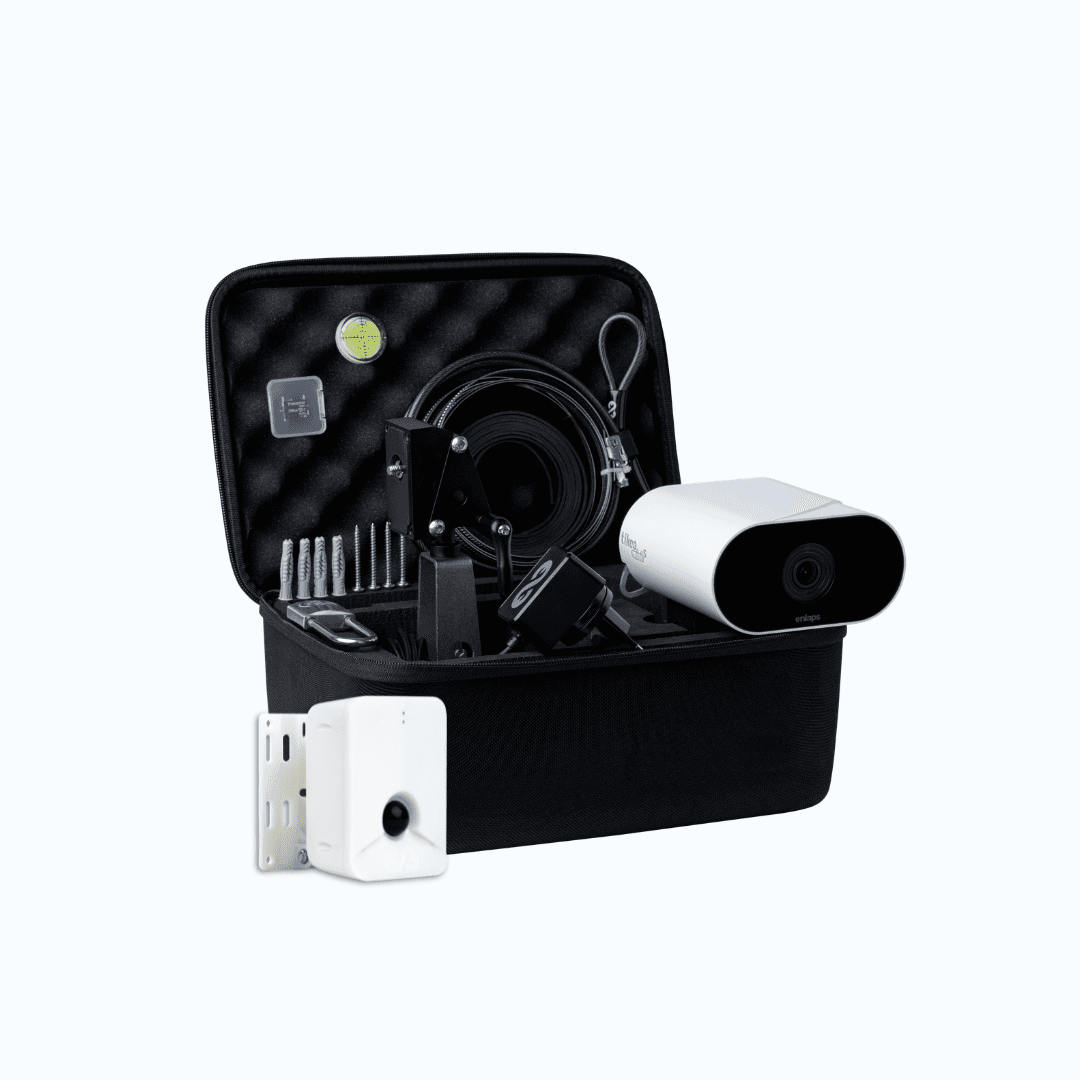
Total Monitoring Pack - Tikee mini S
1.548€ excl. tax

Total Monitoring Pack - Tikee 4X
2.547€ excl. tax
Made in France · Express Shipping · Trade-In Offer
How to Organize and Archive Site Monitoring Documents?
A clear document folder structure must be defined at project kickoff—organized by document type, trade, or phase—and maintained consistently.
A standardized naming convention (date, document type, location, revision number) and strict version control are crucial to ensure teams do not use obsolete drawings.
Centralized cloud storage eliminates fragmented files across personal drives, emails, or paper folders. Post-project archiving preserves key records for maintenance, future work, or decision history.
Which Tools Should Be Used for Site Monitoring?
Tool choice depends on project size, stakeholder count, and required detail.
Tracking via Excel / Spreadsheets
Excel allows quick creation of customized tracking sheets (tasks, assigned parties, planned/actual dates, status, delay notes).
It offers flexibility for simple projects or teams starting out, but reaches its limits when multiple users need concurrent editing, large file storage, or multi-site tracking, leading to version control conflicts.
PDF Templates and Free Tools
PDF templates standardize site reports, visit notes, and checklists. However, they act as static snapshots rather than dynamic interactive dashboards. Free software can cover basic needs, but user permissions, storage, and export capabilities must be verified first.
Specialized Construction Management Software & Apps
Dedicated software centralizes schedules, field reports, photos, documents, and punch lists into one environment.
Mobile apps enable real-time field updates (photographing, tagging, and reporting issues directly from site).
Software is essential for multi-stakeholder projects, provided it is intuitive and regularly used by field teams. Key criteria include mobile access, user permission management, document centralization, and action tracking.
How to Measure Construction Site Progress?
Progress must be measured using objective field data rather than general impressions.
Tracking overall status alongside trade-by-trade or phase-by-phase progress prevents critical delays in specific work packages from hiding behind a healthy overall percentage.
Key Performance Indicators (KPIs)
Core indicators include percentage complete, schedule adherence (planned vs. actual dates per task), and financial tracking (committed vs. baseline costs and remaining budget).
Additional metrics include completed/delayed task counts, labor hours spent, open punch-list items, and resolution lead times.
Selecting a few reliable, actionable metrics is far more effective than tracking excessive noise.
How to Conduct a Project Review?
Conducted upon completion, a site review compares actual performance against original goals across schedule, budget, quality, and defects.
Analyzing the causes of variances (bad estimates, late deliveries, coordination flaws) allows teams to capitalize on lessons learned, replicate successful methods, and apply preventive actions on future projects.
What Is the Cost of Construction Site Monitoring?
Costs vary based on project scope, duration, complexity, and management setup.
Architect or prime contractor monitoring fees may be bundled into broader design/supervision packages. Internal construction company monitoring reflects staff time (project managers, superintendents) plus software subscription costs.
However, monitoring costs should be weighed against the risks prevented: uncoordinated trades, late defect detection, or obsolete drawings cause delays and rework far exceeding the cost of diligent monitoring.
DEMONSTRATION - 30 MINUTES
See the Tikee Solution in action at a construction site like yours
An expert shares their screen with a real-world project connected to the myTikee platform.
Connecting cameras
Managing different camera angles
AI Dashboard
People-blurring feature
No obligation · Time slots available quickly