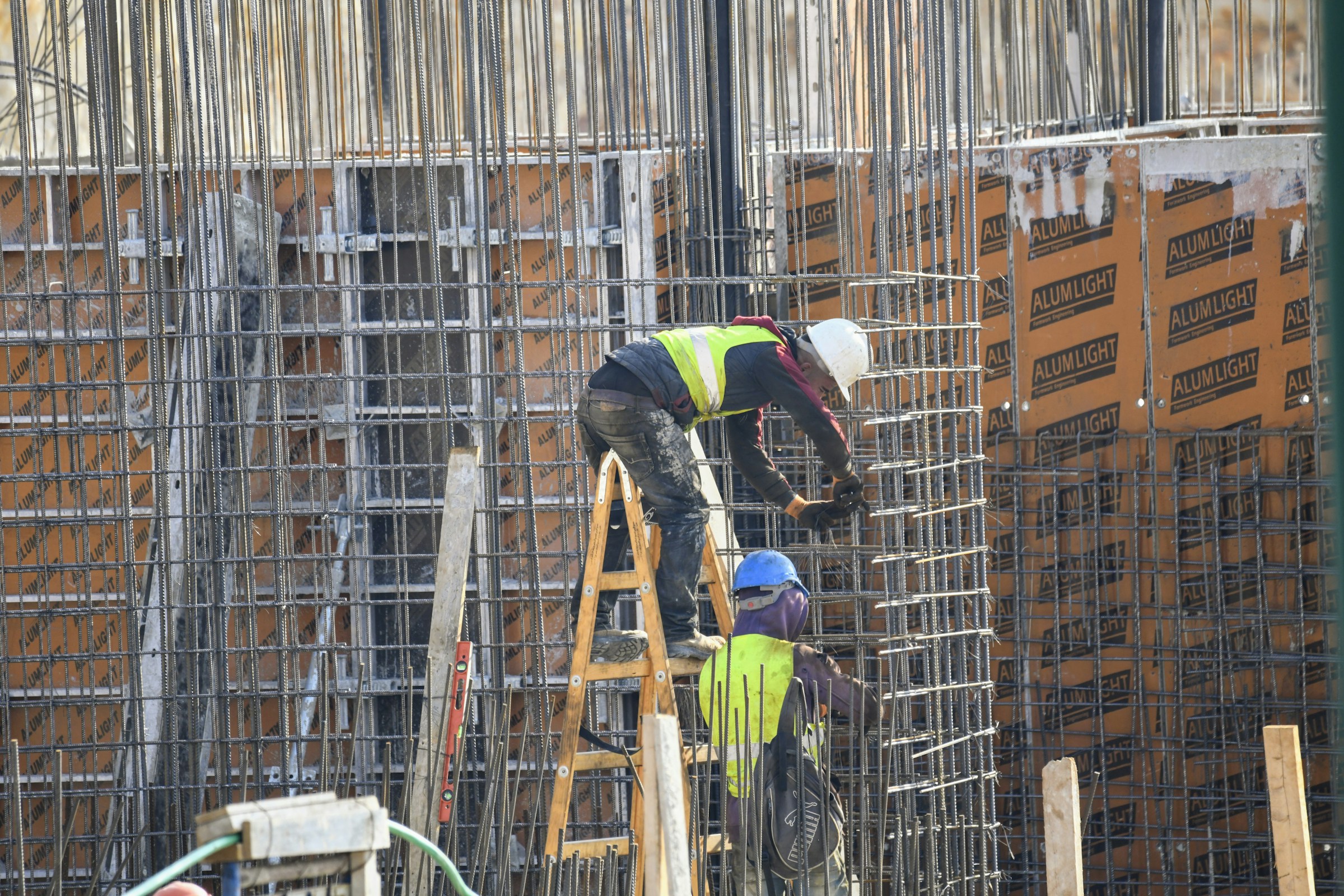
Automatic detection of non-compliant PPE on a construction site relies on AI image analysis: a timelapse camera positioned on site captures images at regular intervals, an algorithm analyzes each image to identify visible personal protective equipment (hard hat, high-visibility vest, safety pants), and flags any detected non-compliance. The Tikee solution by Enlaps integrates this AI construction site PPE detection feature directly into its myTikee platform.
💡
Key Takeaways - Automated AI PPE Detection for Construction Sites
AI-powered automatic PPE detection analyzes images from a site-installed timelapse camera and identifies missing hard hats, hi-vis vests, or safety pants without requiring a permanent human presence on site.
In France, failure to wear PPE exposes employers to criminal liability in the event of an accident: Article L4121-1 of the French Labor Code requires employers to take all necessary measures to ensure worker safety.
Construction accounts for roughly 18% of lost-time work accidents in France according to INRS data, despite strict PPE regulations.
Enlaps' Tikee solution automatically detects missing PPE using images captured on site, without requiring additional sensors or security personnel.
PPE detection reports generated by myTikee are time-stamped and exportable, serving as traceable evidence for HSE audits or claim files. Individuals appearing in these images can be anonymized by the platform.
Why Manual PPE Monitoring Is Insufficient on Large Construction Sites
On medium to large construction sites, having a dedicated HSE (Health, Safety, and Environment) officer permanently monitoring PPE compliance is economically and logistically challenging. Three factors limit the effectiveness of manual checks:
Site footprint: A large construction site covers thousands of square meters with simultaneous activity zones. An HSE officer cannot monitor all high-risk areas at once.
Time continuity: Accidents related to missing PPE occur at any time, including outside scheduled inspection windows. Spot-checking twice a day does not cover 8 to 10 hours of daily activity on an active site.
Lack of traceability: Manual checks produce no systematic documentation. In the event of an accident or audit, the employer lacks verifiable records of the inspections conducted.
In France, approximately 18% of lost-time work accidents occur in the construction sector (INRS data), and failure to wear PPE is identified as a risk factor in a significant portion of severe site accidents.
How AI Automatic PPE Detection Works
Automatic PPE detection relies on a three-stage pipeline: image capture, computer vision algorithm analysis, and report or alert generation.
Stage 1 - Image capture: A timelapse camera installed overhead on site captures images at regular intervals (every 5 to 15 minutes depending on settings). The wide field of view covers all activity areas visible from the installation point.
Stage 2 - AI analysis: Each image is transmitted to a cloud platform where a computer vision algorithm analyzes individuals visible on site. The algorithm detects the presence or absence of mandatory PPE: protective hard hat, high-visibility vest, safety shoes. Detection occurs without human intervention.
myTikee, Enlaps' construction monitoring software, natively integrates this pipeline: the same camera documenting project progress also handles PPE detection, requiring no additional hardware.
ENLAPS SHOP
The camera and the image processing platform


Made in France · Express Shipping · Trade-In Offer
Which PPE Can AI Automatic Detection Identify?
Current AI PPE detection systems reliably identify two categories of visible equipment on standard resolution images:
Hard hats (protective helmets): Detected by their distinct shape and color on a person's head. This is the easiest PPE item to identify via computer vision, with the highest detection rates.
High-visibility vests and safety pants: Identified by reflective strips and fluorescent colors (yellow, orange). Detectable even in low-light conditions due to the optical properties of the material.
Current myTikee systems do not yet reliably detect gloves, hearing protection, or safety harnesses on standard timelapse images.
How Reliable Is AI PPE Detection on a Construction Site?
The reliability of AI PPE detection depends on four variables: camera resolution, distance between the camera and individuals, lighting conditions, and algorithm quality.
Resolution: A minimum resolution of 12 megapixels is required for reliable long-distance PPE detection on a standard-sized site. Below this threshold, the necessary details for identifying equipment are missing from the image.
Distance: Detection reliability decreases as distance between camera and personnel increases, particularly for hard hats and hi-vis vests; it directly depends on the camera resolution used.
Lighting: Detection systems perform best during full daylight. Low-light detection (early morning, dusk, shaded areas) requires specialized algorithms or artificial site lighting.
Algorithm: Computer vision models trained specifically on actual construction site images yield significantly superior results compared to generic models. Enlaps developed its PPE detection algorithms using real construction site footage.
How to Integrate PPE Detection into Construction HSE Management
Automatic PPE detection integrates into existing site safety setups without replacing governing regulatory procedures.
As a traceability tool: myTikee detection reports document performed checks and flagged non-compliances, complete with time-stamping and associated images. These records can support an employer's prevention process and serve as contextual evidence during a CARSAT audit or labor inspection.
As a reporting tool: Images available on myTikee provide HSE managers with a consolidated overview of non-compliances by zone, time period, and PPE type. This data can be incorporated into the Single Risk Assessment Document (DUER).
Automatic detection does not replace mandatory regulatory checks (safety inductions, training, prevention plans) but complements them with a continuous, documented layer of oversight.
What Legal Obligations Govern PPE Compliance on Construction Sites in France?
PPE usage on construction sites is governed by several regulatory texts in France:
Article L4121-1 of the Labor Code requires employers to take all necessary measures to protect the health and physical/mental safety of workers. Failure to comply incurs criminal liability for the employer in the event of an accident.
Decree No. 93-41 of January 11, 1993, transposing EU Directive 89/656/EEC, defines conditions for PPE use and employer obligations regarding equipment provision and training.
On sites subject to SPS coordination (Health and Safety Coordination), the General Coordination Plan (PGC) lists mandatory PPE per area and activity. The SPS coordinator is authorized to record non-compliances and demand immediate corrective actions.
CARSAT (Pension and Occupational Health Insurance Fund) can apply premium surcharges for workplace accident/disease insurance (AT/MP) in case of repeated PPE violations noted during inspections.
DEMONSTRATION - 30 MINUTES
See the Tikee Solution in action at a construction site like yours
An expert shares their screen with a real-world project connected to the myTikee platform.
Connecting cameras
Managing different camera angles
AI Dashboard
People-blurring feature
No obligation · Time slots available quickly
FAQ
How to automatically detect missing PPE on a construction site?
Via a system combining a high-resolution timelapse camera and a computer vision algorithm. The camera captures images at regular intervals, and AI analyzes each frame to detect the presence or absence of mandatory PPE (hard hat, vest, safety pants). Enlaps' Tikee solution integrates this capability into myTikee.
Which PPE can be automatically detected by AI on a construction site?
Current systems reliably detect hard hats, high-visibility vests, and safety pants.
Is automatic PPE detection recognized as evidence during an HSE audit?
Detections documented by myTikee are time-stamped and linked to tamper-proof images. They can support an employer's safety approach and serve as contextual evidence during CARSAT inspections or internal HSE audits; their exact legal value depends on the specific regulatory framework and context of each situation.
Do you need an extra camera for PPE detection, or is the Tikee sufficient?
Tikee is sufficient. The same camera documenting site progress also handles PPE detection via myTikee. No extra sensors or cameras are required to enable this feature.
What regulations govern PPE compliance on construction sites in France?
Article L4121-1 of the French Labor Code mandates employers to ensure worker safety. Decree No. 93-41 of January 11, 1993, outlines obligations for providing and using PPE. On SPS sites, the PGC lists mandatory PPE by area. Non-compliance exposes employers to criminal liability and CARSAT insurance surcharges.
Does automatic PPE detection replace regulatory HSE inspections?
No. Automatic detection complements mandatory regulatory procedures (safety inductions, prevention plans, SPS coordination) without replacing them. It adds a layer of continuous oversight and documented traceability that spot checks cannot provide.