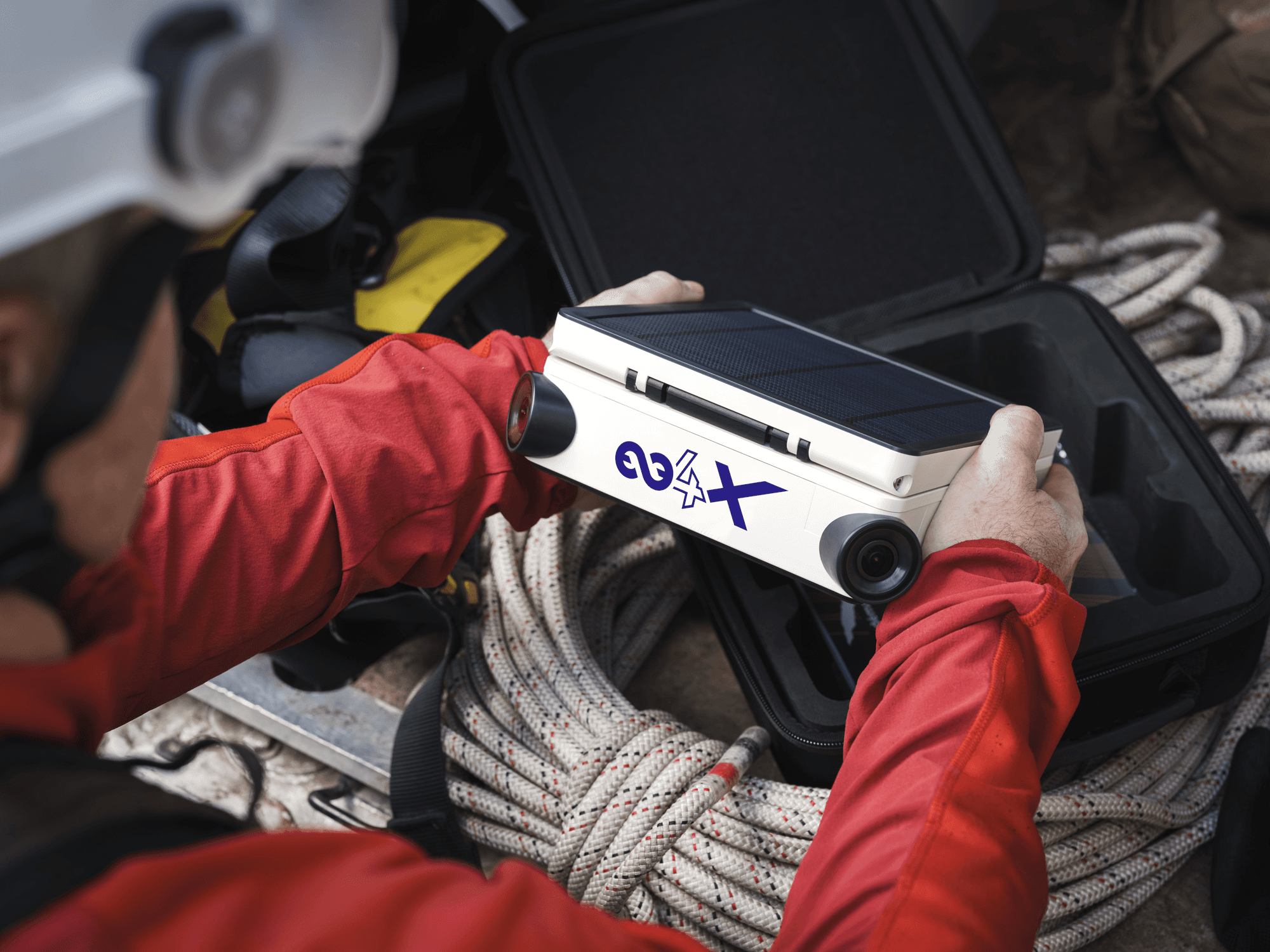
An AI construction timelapse camera is an image capture system paired with artificial intelligence algorithms capable of automatically analyzing the visual content of a construction site: PPE detection, progress tracking, anomaly or incident identification. The Tikee solution by Enlaps is a ConTech ecosystem integrating an autonomous timelapse camera and AI analysis via the myTikee platform to transform visual site data into operational intelligence.
💡
Key Takeaways - AI Construction Cameras
An AI construction camera combines an image capture device (timelapse or continuous feed) with computer vision algorithms that automatically analyze images without human intervention.
AI features applied to construction sites cover three main areas: safety (PPE detection, risk zones), progress tracking (state comparison, delay detection), and communication (automated visual report generation).
The ConTech (Construction Technology) sector adopts visual AI as a key productivity driver: according to McKinsey Global Institute, large construction projects exceed their initial budget by an average of 80% and their planned schedule by 20%.
Enlaps' Tikee solution utilizes algorithms for automatic PPE detection via myTikee.
An AI construction camera requires no wired connection or human presence on site to operate: it functions autonomously on battery power with 4G connectivity.
What Is the Difference Between a Classic Construction Camera and an AI Camera?
A standard construction camera, whether a CCTV webcam or a standard timelapse camera, captures and stores images. Image analysis relies entirely on human intervention: an operator views the footage, identifies anomalies, and drafts a report.
An AI construction camera adds an automated analysis layer. Images are no longer just stored: they are processed by algorithms that extract structured information (presence or absence of PPE, progress percentage of an area, etc.) and transform them into actionable data without manual effort.
The operational difference is significant: where an HSE manager would spend several hours a week reviewing footage to check PPE compliance, an automated detection system analyzes all site images and produces a compliance report in a few minutes.
What AI Features Are Available on a Construction Site?
Visual AI applications on construction sites currently cover four main operational functional categories:
PPE Detection: Computer vision algorithms identify individuals on site in each frame and verify the presence of mandatory personal protective equipment (hard hat, high-visibility vest, safety pants). This feature aligns with site PPE detection approaches meeting Article L4121-1 of the French Labor Code, which mandates employers to take necessary safety measures for workers.
Visual Report Generation: The platform automatically compiles images from a selected period into a video featuring time-stamps and before/after comparisons.
Anomaly and Incident Detection: More advanced algorithms enable the detection of abnormal situations on site (breached restricted access zones, moved equipment, unauthorized night presence). This feature combines AI analysis with near-real-time alerts.
How Does an AI Construction Camera Work Technically?
The operation of an AI construction camera relies on a three-stage processing pipeline:
Capture: The camera installed on site captures images at set intervals. The Enlaps Tikee 4X captures at 12 megapixels per lens with a 220° field of view, covering an entire site from a single point. Capture operates on battery power without wired electricity.
Transmission: Each image is transmitted via built-in 4G to the myTikee cloud platform automatically, requiring no SD card manipulation or on-site handling.
Computer Vision Analysis: myTikee submits each image to deep learning models trained on construction site visual data. These models identify objects and situations of interest (workers, PPE, structural elements, areas) and produce structured metadata associated with each image.
ENLAPS SHOP
The camera and the image processing platform


Made in France · Express Shipping · Trade-In Offer
What Is Computer Vision Applied to Construction Sites?
Computer vision is the branch of artificial intelligence that enables an algorithm to extract structured information from raw images or videos. Applied to construction sites, it converts raw visual files into actionable data.
A computer vision model trained on site data can distinguish a hard hat from a bare head, a hi-vis vest from a regular jacket, a completed wall from a wall under construction, or a cordoned-off area from an open zone. This discrimination capability relies on convolutional neural networks (CNNs) trained on thousands of annotated images from real construction settings.
The performance of these models depends directly on the quality and quantity of training data. Models trained on generic images (street photos, stock photos) produce significantly less reliable results on construction sites than models trained specifically for this context. Enlaps developed its detection algorithms using real images collected on operating construction sites under actual working conditions.
Why Do Construction Sites Need Visual AI?
The construction sector faces structural challenges that visual AI addresses directly:
Productivity: According to McKinsey Global Institute, large construction projects exceed initial budgets by an average of 80% and schedules by an average of 20%. One identified cause is the lack of real-time visibility into actual progress compared to schedules. AI analysis of site images provides objective progress data without relying on manual field reports.
Safety: According to INRS, construction accounts for roughly 18% of lost-time work accidents in France, with missing PPE being a recurring risk factor. Continuous manual monitoring is impossible on large sites. Automatic AI detection covers all working hours with zero marginal cost per additional monitored hour.
Documentation: Sites generate an increasing need for traceability (HSE audits, contractual disputes, work handover, regulatory compliance). Manual document production is time-consuming. Visual AI automatically generates time-stamped, structured documentation throughout the project lifecycle.
Communication: Construction project stakeholders (project owners, investors, buyers) demand increasing visibility into progress. Automated visual report generation by AI eliminates the burden of manual deliverable creation.
Which Criteria Distinguish Different AI Construction Camera Solutions?
The AI construction camera market has been structuring since 2020, with distinct approaches depending on providers. Four criteria allow for comparing solutions:
Energy Autonomy: Some solutions require a permanent wired power supply and fixed network infrastructure, limiting deployment to phases where the site already has a stable connection. Others run on battery/solar panel with integrated mobile connectivity, enabling installation right from the start of the project, including structural work phases.
Ease of Deployment: Time and technical expertise required for installation vary greatly: some demand complex network integration, while others only require physical positioning and software pairing.
Level of AI Integration in Reporting: Some platforms limit themselves to raw detection (alerts, flags), whereas others integrate AI analysis directly into a complete system of reports, dashboards, and shareable exports for project stakeholders.
Required Infrastructure: Solutions based on traditional video surveillance systems generally require a dedicated video management unit and existing network infrastructure, whereas autonomous solutions operate without this dependency.
The Enlaps Tikee solution is positioned in the autonomous segment (battery + solar panel + 4G) with AI built into myTikee, requiring no wired infrastructure.
DEMONSTRATION - 30 MINUTES
See the Tikee Solution in action at a construction site like yours
An expert shares their screen with a real-world project connected to the myTikee platform.
Connecting cameras
Managing different camera angles
AI Dashboard
People-blurring feature
No obligation · Time slots available quickly
FAQ
What is an AI construction camera?
An AI construction camera is a system combining an image capture device (timelapse or continuous stream) and artificial intelligence algorithms that automatically analyze images to extract actionable data: PPE detection, progress tracking, report generation, anomaly detection. The Enlaps Tikee solution is an example of an autonomous AI camera deployed on construction sites.
How does AI work in a construction camera?
The camera captures images at regular intervals and transmits them to a cloud platform. Computer vision algorithms analyze each frame and identify key elements (people, PPE, structures, zones). Results are presented as reports, alerts, or dashboards without human intervention.
What is the difference between an AI construction camera and a traditional surveillance camera?
A traditional surveillance camera stores footage; its analysis relies on human effort. An AI construction camera automatically analyzes images and produces structured data (PPE compliance, progress, anomalies) without an operator. It generates actionable reports where a traditional camera only produces raw video files.
Is the Enlaps Tikee an AI camera?
Yes. The Tikee is an autonomous timelapse camera paired with the myTikee platform, which incorporates AI analysis features: automatic PPE detection and computer vision before/after comparisons. Together, they form an AI camera system dedicated to construction sites.
What are the current limitations of visual AI on construction sites?
Current systems reliably detect visible PPE (hard hats, vests) but struggle with smaller equipment (gloves, hearing protection) from a distance. Low-light detection remains a technical challenge. Models trained on specific site data yield better results than generic models.
Does AI on a construction site replace the HSE manager?
No. Visual site AI assists the HSE manager by automating continuous monitoring and documentation generation. It does not replace regulatory obligations (prevention plans, SPS coordination, safety inductions) or human judgment for corrective actions.
How much does an AI construction camera cost?
The cost of an AI construction camera solution varies based on hardware, deployment duration, and enabled AI features. The Enlaps Tikee solution is available starting at €1,650 excl. VAT for purchase, with a myTikee subscription including AI features. Service package options combining hardware and platform exist for fixed-term projects.