Construction sites expose workers to numerous hazards, from working at heights and operating heavy machinery to handling electrical equipment and hazardous materials. These risks can lead to serious injuries, fatalities, and costly project disruptions when appropriate safety measures are not in place.
The most common causes of accidents on construction sites include falls, struck-by incidents, electrocutions, and caught-in or between accidents. These four categories, historically known as OSHA's Fatal Four, account for a substantial proportion of fatal construction injuries in the United States.
Other common construction accidents involve vehicle collisions, slips and trips, equipment failures, and exposure to hazardous substances. Many incidents are associated with inadequate training, poor supervision, unsafe working conditions, or insufficient risk assessment.
Understanding how these accidents occur is essential for identifying hazards, implementing preventive measures, and improving construction site safety.
💡
Key Takeaways - Common Causes of Accidents on Construction Sites
The "Fatal Four" and the Preeminence of Falls: Falls from heights represent the single largest cause of fatal construction injuries (nearly 40%), leading OSHA's "Fatal Four" alongside struck-by objects, electrocutions, and caught-in/between incidents—all of which require dedicated collective protection over reliance on PPE alone.
Underlying Organizational and Human Root Causes: Accidents rarely occur in isolation; they are heavily driven by systemic factors such as inadequate task-specific training, poor equipment maintenance, subcontractor communication gaps, fatigue, and tight project schedules that encourage rushing.
Rigorous Risk Prevention and the Hierarchy of Controls: Effective safety depends on proactive planning—prioritizing hazard elimination and engineering controls (such as guardrails, trench shoring, and segregated vehicle/pedestrian routes) before personal protective equipment, supported by pre-task Job Safety Analyses (JSAs) and toolbox talks.
Digital Monitoring and Reporting as a Complement: Digital safety management platforms, mobile reporting apps, site cameras/timelapse, and AI-driven hazard detection (e.g., PPE compliance, spatial proximity) improve visibility and incident traceability, but serve to enhance—never substitute for—qualified on-site supervision and physical safeguards.
What Are the Most Common Construction Site Accidents?
Construction accidents vary depending on the type of project, work environment, equipment used, and activities being performed.
Some incidents result from direct exposure to physical hazards, while others involve unsafe procedures, inadequate protective measures, or failures in communication between workers and contractors.
The following categories represent some of the most common and serious accidents encountered on construction sites.
Falls From Heights
Falls from heights are a leading cause of fatal injuries in the construction industry.
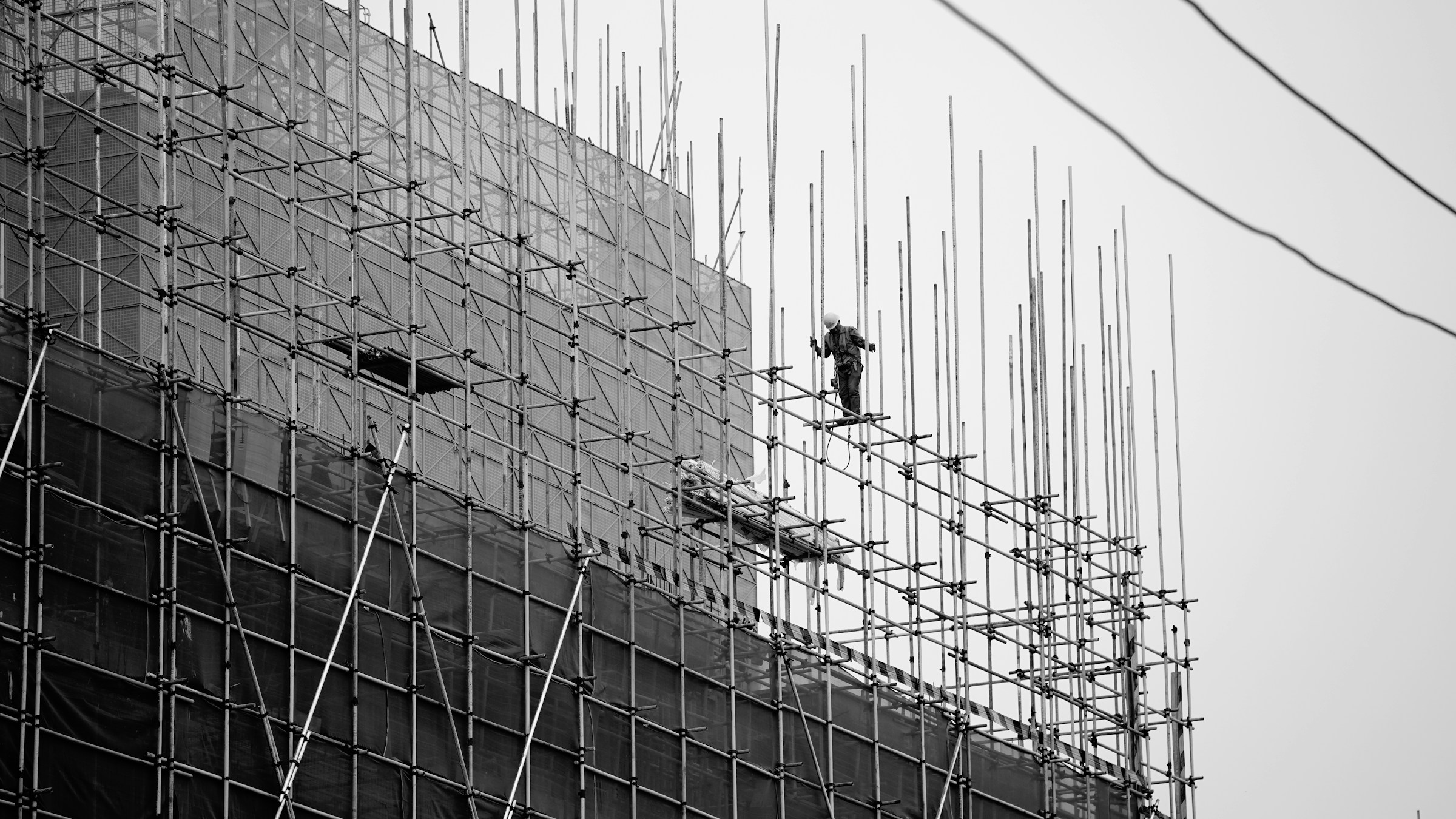
They frequently occur during roofing, scaffolding, structural assembly, and work on elevated platforms.
Workers may fall from ladders, scaffolds, roofs, or unprotected building edges. Open floor penetrations and improperly secured temporary structures can also create serious fall hazards.
Common contributing factors include:
Missing or inadequate guardrails and fall protection systems.
Improperly installed or maintained scaffolding.
Incorrect ladder positioning or use.
Unprotected floor openings and roof edges.
Slippery or unstable working surfaces.
For example, a worker installing roofing materials may be exposed to a serious fall hazard if the roof perimeter lacks adequate protection.
Fall prevention should prioritize collective protection measures, including guardrails, safe working platforms, and properly covered openings.
Where these measures are insufficient or impractical, appropriate personal fall protection systems may be required.
Equipment inspections, worker training, and careful planning of elevated activities are essential for reducing construction-related fall accidents.
Struck-by Objects and Falling Materials
Struck-by accidents occur when workers are hit by moving, falling, flying, or swinging objects.
These incidents are particularly serious hazards in environments involving lifting operations, overhead construction activities, moving equipment, and material handling.
Examples include workers being struck by falling tools, suspended loads, moving machinery, or materials released during demolition.
The severity of injuries depends on factors such as the object's mass, speed, and point of impact.
Common causes include unsecured materials, inadequate lifting procedures, poor load stability, and insufficient separation between workers and hazardous operations.
For instance, tools left unsecured on scaffolding can fall onto workers operating below.
Preventive measures include installing toe boards and debris netting, securing tools and materials, establishing exclusion zones, and inspecting lifting equipment.
Workers should also wear suitable head protection when exposed to falling-object hazards.
However, personal protective equipment cannot replace measures designed to prevent objects from falling or striking workers.
Electrocution and Electrical Accidents
Electrical accidents occur when workers come into contact with energized equipment, exposed conductors, or electrical installations.
They can cause electric shock, severe burns, cardiac injury, and fatal electrocution.
Construction sites present particular electrical risks because temporary installations, portable equipment, and changing work environments may expose workers to damaged or inadequately protected electrical systems.
Common causes include contact with overhead power lines, damaged electrical cables, improper grounding, and work performed on energized equipment without appropriate safeguards.
Heavy machinery can also create electrical hazards when cranes, excavators, or lifting equipment operate near power lines.
For example, a crane boom contacting an energized overhead line can expose the operator and nearby workers to potentially fatal electrical currents.
Electrical accident prevention requires appropriate isolation procedures, equipment inspections, protective devices, and safe working distances from energized installations.
Only appropriately qualified personnel should perform electrical work requiring specialized knowledge or authorization.
Caught-in or Between Accidents
Caught-in or between accidents occur when workers are trapped, compressed, crushed, or squeezed between objects, machinery, or structures.
These incidents can result in severe injuries, including fractures, amputations, and fatal crushing injuries.
Typical situations include workers becoming trapped between moving equipment and fixed structures, being caught in unguarded machinery, or being buried by collapsing excavation walls.
Trench collapses are particularly dangerous because large volumes of soil can move suddenly and exert substantial pressure on trapped workers.
Other contributing factors include inadequate machine guarding, unsafe maintenance procedures, unstable materials, and insufficient separation from moving equipment.
Preventive measures include appropriate excavation protective systems, machinery guarding, energy isolation procedures, and controlled access to hazardous work areas.
Workers should never enter an excavation requiring protective measures unless those measures have been properly installed and verified.
Regular inspections are also necessary to identify changes in ground conditions, equipment stability, or surrounding construction activities.
Slips, Trips and Same-Level Falls
Not all construction-related falls involve working at height.
Slips, trips, and same-level falls can occur throughout construction sites, particularly in areas with uneven ground, temporary walkways, scattered materials, or wet surfaces.
Workers may trip over cables, tools, debris, or poorly positioned equipment. Slips can occur on muddy surfaces, wet flooring, or areas contaminated by oil and other substances.
These incidents can cause sprains, fractures, head injuries, and other musculoskeletal injuries.
Common contributing factors include poor housekeeping, inadequate lighting, obstructed access routes, and unsuitable walking surfaces.
Preventing these accidents requires maintaining clear pedestrian routes, organizing materials, securing temporary cables, and addressing slippery conditions.
Regular housekeeping inspections are particularly important because site layouts and material storage areas change as construction progresses.
Construction Vehicle and Heavy Machinery Accidents
Construction projects rely on excavators, cranes, loaders, forklifts, trucks, and other heavy equipment.
Operating these machines near workers creates risks of collisions, crushing injuries, overturning incidents, and struck-by accidents.
Vehicle-related accidents often involve restricted visibility, reversing movements, congested work areas, and inadequate separation between pedestrians and machinery.
For example, an excavator operator may have limited visibility of workers positioned near the machine's rear or within its operating radius.
Construction vehicle accidents can also result from unstable ground conditions, excessive loads, equipment defects, or improper operating procedures.
Effective prevention requires site traffic management plans that establish vehicle routes, pedestrian walkways, loading areas, and restricted zones.
Additional measures include equipment inspections, trained operators, suitable warning systems, and designated signalers where necessary.
Lifting operations should also account for ground stability, equipment capacity, suspended loads, and nearby structures.
Clear communication between operators and ground personnel is essential when machinery operates in confined or shared work areas.
Fires, Explosions and Hazardous Material Exposure
Construction sites may contain flammable materials, combustible dust, pressurized gas cylinders, fuels, and hazardous chemicals.
Activities such as welding, cutting, grinding, and electrical installation can introduce ignition sources.
Fires and explosions may occur when these activities take place near combustible materials or when flammable substances are improperly stored or handled.
For example, sparks generated during welding can ignite nearby combustible materials if adequate precautions are not implemented.
Construction workers may also be exposed to hazardous substances such as silica dust, asbestos, solvents, and welding fumes.
These exposures can cause acute injuries or contribute to occupational illnesses, including respiratory diseases.
Preventive measures include safe material storage, ventilation, dust suppression, hot-work controls, and appropriate fire protection equipment.
Hazardous substances should be identified through product information and risk assessments, with suitable handling procedures established before work begins.
Workers must also receive training on relevant exposure risks and emergency response procedures.
What Are the Main Causes of Construction Accidents?
Construction accidents rarely result from a single isolated factor.
An incident may involve an immediate hazard, such as an unprotected opening or moving vehicle, combined with underlying problems in planning, supervision, equipment maintenance, or communication.
Identifying these contributing factors is essential for preventing similar accidents.
Inadequate Safety Training and Supervision
Insufficient training can leave workers unaware of the hazards associated with their tasks or uncertain about the procedures required to control them.
This is particularly dangerous when workers operate machinery, perform electrical work, enter excavations, or work at height.
For example, a worker who has not received appropriate ladder safety training may position equipment incorrectly or fail to recognize unstable working conditions.
Inadequate supervision can compound these risks when unsafe practices are not identified or corrected.
Construction companies should provide site-specific inductions, task-related instruction, and additional training when equipment or working conditions change.
Supervisors must also verify that workers understand and follow established procedures.
Training should be adapted to the actual risks of each activity, rather than limited to general safety awareness.
Lack of Personal Protective Equipment (PPE)
Personal protective equipment helps reduce exposure to hazards that cannot be adequately controlled through other preventive measures.
Depending on the activity, workers may require safety helmets, protective footwear, eye protection, gloves, respiratory protection, hearing protection, or fall protection equipment.
Accidents and injuries can become more severe when appropriate PPE is unavailable, incorrectly selected, damaged, or improperly used.
For example, workers exposed to flying particles during cutting operations may suffer eye injuries if suitable eye protection is not worn.
However, PPE alone cannot eliminate workplace hazards.
A safety helmet cannot prevent a suspended load from falling, and a high-visibility vest cannot prevent a vehicle collision.
Construction companies should therefore follow the hierarchy of controls, prioritizing hazard elimination, engineering controls, and safer work procedures before relying on PPE.
Poor Equipment Maintenance and Unsafe Working Conditions
Defective equipment and poorly maintained work environments can contribute to serious construction accidents.
Common equipment-related hazards include damaged electrical cables, malfunctioning machinery, worn lifting components, defective brakes, and improperly maintained scaffolding.
For example, a lifting operation may become dangerous if equipment defects compromise load control or stability.
Unsafe working conditions can also involve unstable ground, inadequate lighting, obstructed access routes, and poorly secured materials.
These hazards may develop gradually as construction progresses or emerge suddenly following changes in weather or site activities.
Preventive measures include scheduled maintenance, pre-use inspections, equipment defect reporting, and regular site assessments.
Equipment that cannot be operated safely should be removed from service until the problem has been corrected.
Human Error, Fatigue and Time Pressure
Human actions can contribute to construction accidents, but unsafe behavior often reflects broader organizational and working conditions.
Fatigue, excessive workloads, unclear instructions, and time pressure can affect attention, decision-making, and the ability to recognize hazards.
For example, workers operating under tight deadlines may skip equipment checks or attempt tasks without completing required safety preparations.
Long working hours and insufficient rest can also increase fatigue-related risks, particularly during physically demanding or repetitive activities.
Accident prevention should therefore address the conditions that influence worker behavior.
Realistic scheduling, appropriate staffing, adequate rest, and clear work procedures help reduce unnecessary exposure to hazards.
Incident investigations should examine why unsafe decisions occurred, including whether workers had sufficient training, equipment, time, and supervision to complete tasks safely.
Poor Communication and Risk Assessment
Construction sites frequently involve multiple contractors performing different activities in shared spaces.
Without effective communication, workers may be unaware of nearby hazards, changes in site access, or simultaneous operations.
For example, excavation work performed near an active vehicle route may create additional risks if machinery operators and ground personnel are not informed of the changing conditions.
Inadequate risk assessments can also result in hazards being overlooked or preventive measures becoming unsuitable as construction progresses.
Risk assessments should be completed before hazardous activities begin and reviewed whenever site conditions change.
Daily safety briefings, coordination meetings, and clear reporting procedures help ensure that relevant information reaches the workers affected. Effective jobsite communication also helps contractors share safety instructions, coordinate simultaneous activities, and communicate changes in site conditions.
Communication should also account for language differences, subcontractor arrangements, and changes in personnel.
A consistent process for reporting unsafe conditions and near misses can help identify emerging risks before an accident occurs.
Construction Accident Statistics: What Does OSHA Say?
Construction remains one of the most hazardous industries in the United States. Workers face risks associated with elevated work areas, heavy equipment, electrical installations, and constantly changing site conditions.
Construction accident statistics published by the Occupational Safety and Health Administration (OSHA) and the Bureau of Labor Statistics (BLS) help identify the hazards responsible for serious and fatal workplace injuries.
These statistics also provide valuable information for prioritizing preventive measures and improving construction safety management.
The OSHA Fatal Four Construction Hazards
OSHA has historically identified four major categories of fatal construction hazards, commonly known as the Fatal Four or Focus Four.
These categories are:
Falls: accidents involving workers falling from roofs, ladders, scaffolding, elevated platforms, or other heights.
Struck-by incidents: injuries caused by moving vehicles, falling materials, swinging loads, or other objects striking workers.
Electrocutions: fatal injuries resulting from contact with energized electrical equipment, power lines, or exposed conductors.
Caught-in or between incidents: accidents in which workers are crushed, trapped, or compressed by machinery, collapsing structures, or materials.
These hazards have historically accounted for a substantial proportion of fatal construction injuries in the United States.
OSHA's Focus Four training program addresses these categories to help workers recognize hazardous situations and understand appropriate preventive measures.
However, the Fatal Four should not be interpreted as an exhaustive classification of construction accidents. Other hazards, including fires, hazardous substance exposure, and transportation incidents, can also cause serious injuries or fatalities.
Furthermore, official injury statistics may use different classifications. For example, BLS groups workplace fatalities according to event or exposure categories, which do not always correspond directly to OSHA's Focus Four terminology.
What Is the Leading Cause of Death in Construction?
Falls to a lower level are the leading cause of fatal construction injuries in the United States.
According to the US Bureau of Labor Statistics, falls, slips, and trips accounted for 421 of the 1,075 fatal occupational injuries recorded in the private construction industry in 2023.
This represents approximately 39% of construction fatalities that year. Transportation incidents accounted for another 240 fatalities, or approximately 22%.
Most fatal incidents in the falls, slips, and trips category involved falls to a lower level, highlighting the importance of fall protection during elevated construction activities.
Roofing, structural work, scaffolding, and ladder use present significant risks when appropriate protective measures are missing or ineffective.
Fall prevention should therefore remain a priority throughout construction projects.
Important preventive measures include properly installed guardrails, safe working platforms, covered floor openings, and suitable personal fall protection systems.
Employers must also ensure that workers receive appropriate training and that fall protection equipment is inspected and used correctly.
While falls represent the leading fatal hazard, other accident categories also require systematic prevention. Vehicle incidents, contact with equipment, and electrical hazards can have severe consequences even when they occur less frequently.
What Are the Most Common Construction Workplace Injuries?
Construction workplace injuries range from minor cuts and bruises to serious fractures, traumatic injuries, and occupational illnesses.
The types of injuries vary according to the activity performed and the circumstances of the accident.
Common construction injuries include:
Sprains and strains: often associated with manual material handling, overexertion, slips, and awkward movements.
Fractures: frequently resulting from falls, vehicle incidents, or contact with heavy objects.
Cuts and lacerations: caused by sharp materials, cutting tools, and machinery.
Contusions and crushing injuries: associated with falling objects, equipment movements, and material handling.
Burns and electrical injuries: resulting from electrical contact, hot surfaces, welding, or chemical exposure.
Head injuries: potentially caused by falls, falling materials, or collisions.
Repeated exposure to hazardous conditions can also contribute to occupational diseases, including hearing loss, respiratory illnesses, and musculoskeletal disorders.
The frequency of these injuries depends on the population studied, reporting criteria, and statistical period.
For this reason, construction accident statistics should distinguish between fatal injuries, nonfatal injuries involving days away from work, and occupational illnesses.
Combining these categories without considering their definitions can lead to misleading conclusions about the most common construction accidents.
How to Prevent Accidents on Construction Sites
Preventing construction accidents requires a systematic approach that combines hazard identification, effective controls, worker training, and continuous monitoring.
Safety measures must be adapted to the project's activities, equipment, workforce, and changing site conditions.
The most effective prevention strategies address hazards before workers are exposed rather than relying exclusively on protective equipment or corrective actions after an incident.
Conduct Regular Hazard Identification and Risk Assessments
Risk assessment is the foundation of construction accident prevention.
Before starting work, contractors should identify potential hazards, evaluate their consequences, and determine which preventive measures are required.
Assessments should consider the work environment, machinery, materials, weather conditions, and interactions between different construction activities.
For example, installing structural components may involve fall hazards, suspended loads, and vehicle movements within the same work area.
A risk assessment should identify each hazard and establish appropriate controls before operations begin.
Job safety analyses (JSAs) can help break complex activities into individual tasks, making it easier to identify specific risks and required precautions.
Risk assessments should also be updated when construction activities change, new equipment is introduced, or previously unidentified hazards emerge.
Regular site inspections and worker feedback provide additional information for identifying unsafe conditions. Digital construction safety software can also support hazard identification by helping teams document safety observations and review potential risks throughout the project.
Implement Safety Procedures and Protective Equipment
Construction safety procedures define how hazardous activities should be performed and which precautions must be followed.
They should cover activities such as working at height, lifting operations, excavation, electrical work, machinery maintenance, and hazardous material handling.
Preventive measures should follow the hierarchy of controls, which prioritizes eliminating hazards before relying on individual protection.
For example, installing permanent or temporary guardrails can provide collective protection against falls, while personal fall arrest systems may be necessary when other controls cannot adequately address the risk.
Similarly, separating pedestrian routes from vehicle circulation areas reduces collision risks more effectively than relying solely on high-visibility clothing.
Personal protective equipment remains essential where residual hazards cannot be eliminated.
Employers should ensure that PPE is suitable for the activity, properly fitted, maintained, and replaced when necessary.
Safety procedures must also establish responsibilities for verifying that protective measures are correctly implemented.
Provide Worker Training and Safety Inspections
Worker training helps employees recognize hazardous situations and understand the procedures required to perform their tasks safely.
Training should address site-specific risks, equipment operation, emergency procedures, and the correct use of protective systems.
Workers performing specialized activities may require additional qualifications or task-specific instruction.
For example, operating cranes, performing certain electrical tasks, or working with specialized equipment may require specific competencies under applicable regulations.
Regular toolbox talks can reinforce safety procedures and address hazards associated with upcoming construction activities.
Safety inspections provide another essential layer of prevention.
They help identify defective equipment, missing protective measures, unsafe access routes, and other conditions that could contribute to accidents.
Inspection findings should be documented, assigned to responsible personnel, and followed by corrective actions. A structured construction daily report can help teams document site conditions, record safety observations, and monitor issues requiring follow-up.
The effectiveness of an inspection depends on whether identified hazards are corrected, not simply on how many inspections are completed.
Improve Site Communication and Emergency Preparedness
Construction activities frequently involve several contractors working simultaneously.
Effective communication helps prevent accidents caused by conflicting operations, unexpected equipment movements, or changes in site conditions.
Daily coordination meetings can help identify interactions between activities and establish appropriate safety arrangements.
Workers should receive clear instructions about restricted areas, vehicle movements, lifting operations, and other hazards affecting their work.
Emergency preparedness is equally important.
Construction sites should have procedures for responding to fires, medical emergencies, structural failures, hazardous material incidents, and other foreseeable emergencies.
These procedures should define evacuation routes, emergency contacts, assembly points, and responsibilities for designated personnel.
Emergency arrangements must remain accessible and appropriate as the site layout changes.
Regular drills and reviews help verify that workers understand how to respond and that emergency procedures remain effective.
How Can Technology Help Prevent Construction Accidents?
Digital technologies provide additional ways to identify hazards, document site conditions, and improve safety coordination.
Construction companies can use cameras, connected sensors, artificial intelligence, and digital reporting platforms to support traditional safety management practices.
These tools are particularly useful on large projects where multiple activities occur simultaneously and site conditions change frequently.
However, technology should complement established preventive measures rather than replace qualified supervision, physical safeguards, or worker training.
Construction Site Monitoring and Surveillance Cameras
Digital construction site monitoring provides additional visibility into ongoing activities, equipment movements, and changing work environments.
Depending on the system, cameras may capture continuous video, periodic photographs, or time-lapse sequences documenting construction progress. A timelapse camera can help project managers review how site layouts, access routes, and equipment positions evolve throughout different construction phases.
These visual records can support safety discussions, help identify situations requiring further inspection, and provide useful context when reviewing reported incidents.
Remote monitoring allows authorized project stakeholders to review site conditions without being physically present for every observation.
For example, project managers can use images to assess the organization of work areas, observe changes in access routes, or review the positioning of equipment and materials.
Visual records can also support safety discussions and help teams investigate conditions associated with reported incidents.
Time-lapse imagery is particularly useful for documenting changes over extended periods. It can provide a chronological record of construction activities and help teams understand how site conditions evolve between project phases.
However, periodic image capture cannot guarantee that every hazardous event will be recorded.
Camera-based monitoring must therefore remain complementary to on-site inspections and direct supervision.
Organizations must also consider privacy requirements, data protection obligations, and applicable rules governing workplace monitoring.
ENLAPS SHOP
The camera and the image processing platform


Made in France · Express Shipping · Trade-In Offer
AI-Powered Hazard Detection and PPE Monitoring
Advances in ai in construction safety are creating new opportunities to identify predefined hazardous situations through automated image and video analysis.
For example, computer vision systems can support ppe detection by identifying certain protective equipment, such as safety helmets or high-visibility clothing, in images captured on construction sites.
More broadly, ai cameras for construction can help analyze visual data, identify certain unsafe conditions, and provide additional information to safety managers.
Potential applications also include identifying workers in restricted areas and recognizing proximity between people and machinery.
For example, an AI-assisted camera system may be configured to detect whether visible workers appear to be wearing safety helmets in designated areas.
Other systems may analyze vehicle movements or generate alerts when predefined spatial conditions are detected.
These applications can help safety teams prioritize observations and respond to certain risks more efficiently.
However, AI-powered hazard detection is not a substitute for established safety controls.
Detection accuracy depends on image quality, lighting, camera positioning, visibility, and the capabilities of the underlying model.
Occluded workers, unusual viewing angles, and changing environmental conditions can affect results.
AI systems may also produce false alerts or fail to identify hazardous situations.
For these reasons, automated observations should be reviewed by qualified personnel and integrated into existing construction safety procedures.
Digital Safety Reporting and Incident Tracking
Digital reporting platforms help construction companies organize safety observations, inspections, incident records, and corrective actions.
Instead of relying exclusively on paper forms, site supervisors can document hazards using mobile devices and share information with relevant project stakeholders.
Reports may include photographs, descriptions of unsafe conditions, responsible personnel, and deadlines for corrective measures.
Centralized records can help project managers monitor unresolved hazards and identify recurring safety problems across different work areas.
For example, repeated reports of blocked access routes may indicate weaknesses in material storage procedures or site logistics.
Incident tracking systems can also support investigations by preserving relevant information and documenting the actions taken after an accident or near miss.
Safety dashboards may display indicators such as completed inspections, reported incidents, outstanding corrective actions, and training completion rates.
These metrics help organizations evaluate whether preventive activities are being implemented consistently.
However, digital reporting only improves safety when the information collected leads to timely decisions and effective corrective measures.
DEMONSTRATION - 30 MINUTES
See the Tikee Solution in action at a construction site like yours
An expert shares their screen with a real-world project connected to the myTikee platform.
Connecting cameras
Managing different camera angles
AI Dashboard
People-blurring feature
No obligation · Time slots available quickly
Best Practices for Improving Construction Site Safety
Reducing construction accidents requires consistent prevention measures throughout the project lifecycle.
Safety procedures must remain practical, clearly communicated, and adapted to the hazards encountered on each site.
The following practices help construction companies strengthen accident prevention:
Prioritize high-risk activities: focus preventive measures on falls, lifting operations, electrical work, excavations, and interactions with heavy machinery.
Integrate safety into project planning: assess hazards before activities begin and coordinate operations to avoid unnecessary exposure.
Maintain equipment and protective systems: conduct appropriate inspections and remove defective equipment from service.
Provide task-specific training: ensure workers understand the hazards associated with their activities and the controls required.
Encourage hazard and near-miss reporting: establish clear reporting procedures and address identified problems promptly.
Coordinate contractors and subcontractors: communicate site changes, shared risks, and responsibilities between teams.
Use digital monitoring where appropriate: support inspections, document changing conditions, and improve access to safety information.
Review incidents and corrective actions: investigate underlying causes and verify that implemented measures reduce the identified risks.
Construction accident prevention also depends on management commitment and worker participation.
Supervisors must ensure that safety requirements are respected, while workers should have opportunities to report concerns and contribute to risk assessments.
Regular inspections, clear communication, and reliable documentation help organizations identify emerging hazards before they result in injuries.
Digital tools can strengthen these processes by improving visibility into site conditions and making safety information easier to share.
Ultimately, the most effective way to prevent construction accidents is to identify hazards early, eliminate or control risks, and continuously verify that protective measures remain effective.
By combining practical safety procedures, trained workers, coordinated operations, and appropriate monitoring technologies, construction companies can reduce exposure to common hazards and create safer working environments.